Who benefits most?
Exercise rehabilitation is relevant to almost any musculoskeletal presentation, but it is particularly valuable where pain keeps recurring or where passive treatment alone has not produced lasting results.
If you have seen practitioners before and the problem keeps coming back, there is usually a reason. It is rarely because you need more treatment - it is more often because the treatment did not address the underlying driver.
Rehabilitation is also important for anyone returning to training after injury. Sports injuries in particular need more than just pain reduction - they need graded reloading of the affected tissue and, often, correction of the patterns that caused the injury in the first place.
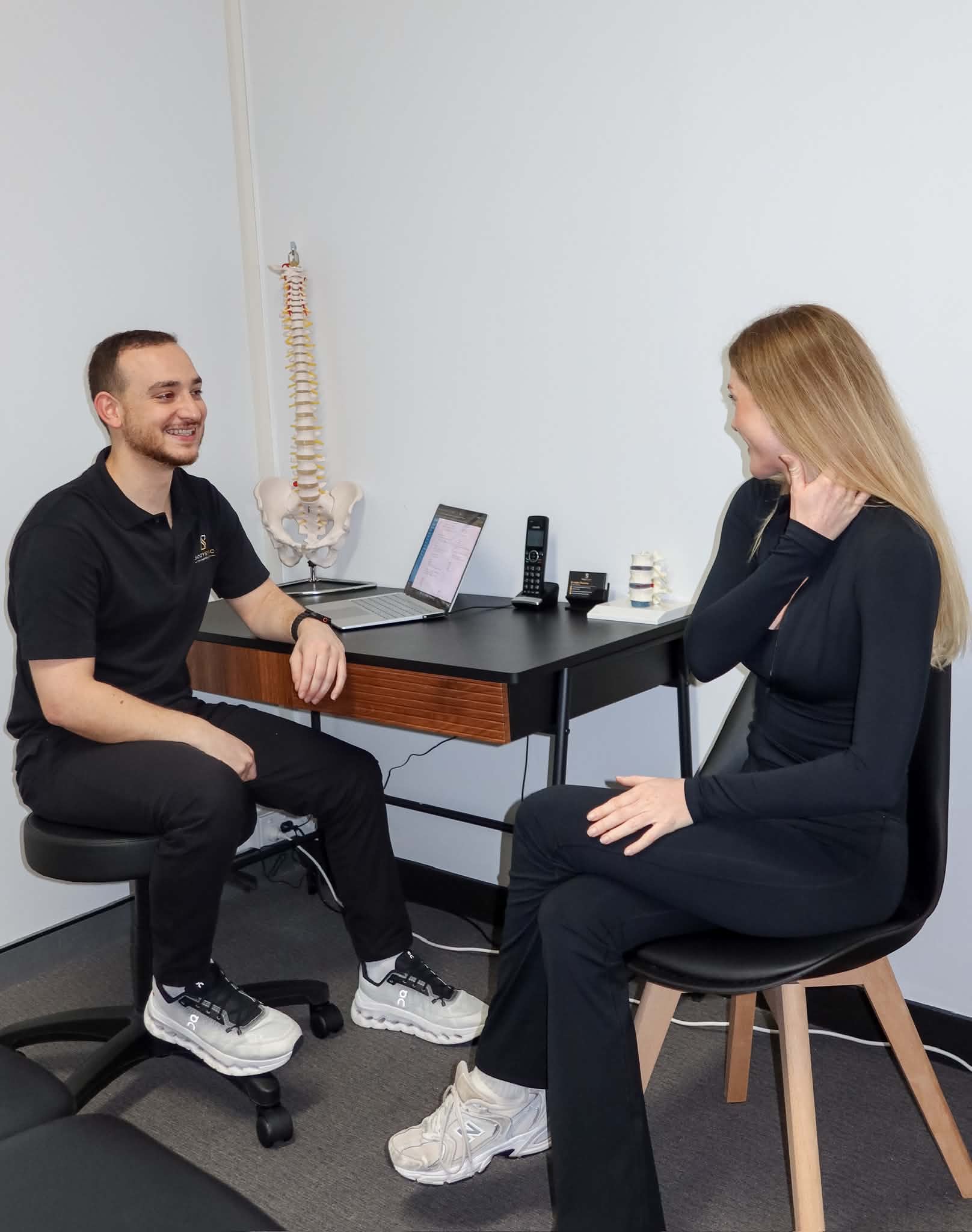
If you are not sure whether rehabilitation would be useful for your situation, that is exactly what the initial assessment is for.
Common presentations
- Recurring injuryThe same thing keeps happening because the underlying deficit was never addressed
- Chronic painPain that has been present for months or years, often with unhelpful movement patterns that have developed around it
- Post-surgical rehabilitationReturning to full function after surgery in a structured, graded way
- Sports performanceIdentifying and addressing weaknesses or movement deficits that limit performance or increase injury risk
- Returning to activityAfter a period of inactivity, with a plan that reintroduces load safely
- Load managementFor athletes doing high training volumes who want to reduce injury risk
Common conditions
Where rehabilitation makes a difference
Lower back pain
Strengthening the core and posterior chain to support the spine and reduce recurrence
Neck and shoulder pain
Addressing postural weakness and scapular control to reduce ongoing neck and upper back issues
Shoulder injuries
Rebuilding rotator cuff strength and shoulder stability after impingement, instability, or surgery
Tendon pain
Progressive loading programs for Achilles, patellar, and rotator cuff tendon issues
Knee and ankle injuries
Balance, strength, and control work to prevent recurring sprains and instability
Return to sport
Graded reloading after injury or surgery with clear milestones before returning to full training
In detail
How rehabilitation helps with common conditions
Recurring lower back pain
Lower back pain that keeps coming back is one of the most common reasons patients start a rehabilitation program. The pattern is familiar: pain flares up, treatment helps it settle, then weeks or months later it returns. In most cases, the missing piece is addressing the strength and control deficits that allow the pain to recur. Core stability, gluteal strength, and hip mobility are the most common targets. A well-designed program addresses these deficits progressively, giving the spine the muscular support it needs to stay well.
Neck pain and postural issues
Postural neck pain responds well to a combination of manual treatment and targeted exercises. Thoracic adjustments and soft tissue work reduce pain and restore movement. Rehabilitation then targets the deep neck flexors, scapular stabilisers, and thoracic extensors - the muscles that hold you upright and resist the forward-head posture that drives most desk-related neck pain. These exercises do not need to be time-consuming, but they do need to be done consistently.
Shoulder rehabilitation
Shoulder impingement, rotator cuff issues, and post-surgical shoulders all require progressive strengthening to recover fully. The rotator cuff and scapular stabilisers need to be strong enough to control the shoulder joint through its full range under load. Rehabilitation starts with simple, low-load exercises and builds toward functional and sport-specific movements. For gym-goers returning to pressing and overhead work, the program is designed to bridge the gap between clinical rehab and full training.
Tendon pain
Tendons respond to load. Rest alone does not fix a tendinopathy - it just deloads the tissue temporarily, and the pain returns when loading resumes. Progressive tendon loading programs (isometric, eccentric, and heavy slow resistance) are the best-supported approach for Achilles, patellar, and rotator cuff tendon pain. We design the loading program to match where the tendon is in its recovery and adjust it as tolerance improves.
Post-surgical recovery
After surgery - ACL reconstruction, shoulder repair, spinal procedures - rehabilitation is essential for regaining function and returning to normal activity. We work alongside your surgeon's guidelines, progressing through graded stages from early range of motion through to strength, control, and eventually sport-specific loading. The timeline varies depending on the procedure, but the approach is always structured and milestone-based.
Chronic pain and deconditioning
People who have been in pain for months or years often become deconditioned - they move less, lose strength, and develop a fear of certain movements. This creates a cycle where the lack of movement makes the pain worse, which leads to even less movement. Graded exercise rehabilitation breaks this cycle by gradually reintroducing movement in a controlled, safe way. The program starts well within the patient's tolerance and builds progressively. The goal is not just physical improvement but also restoring confidence in movement.
Balance and proprioception
After ankle sprains, knee injuries, or any lower limb problem, the body's sense of joint position (proprioception) is often impaired. This means the joint is less stable and more likely to give way or be re-injured. Balance and proprioceptive exercises retrain the nervous system to control the joint effectively, reducing re-injury risk. This is an essential part of sports injury rehabilitation that is often overlooked.
Workplace and ergonomic injuries
Repetitive strain injuries, desk-related pain, and manual handling injuries all benefit from targeted rehabilitation. The exercises address the specific demands of the person's work environment - strengthening the muscles that are underused and stretching the ones that are overloaded. Combined with manual treatment through adjustments and soft tissue therapy, and where appropriate, ergonomic advice, this approach addresses both the injury and the environment contributing to it.
The process
How rehabilitation fits into your care
Assessment identifies the gaps
Your initial assessment includes movement testing to identify where strength, control, or mobility is lacking. This forms the basis of your exercise program. We are looking for the specific deficits relevant to your presentation, not running through a standard battery of tests.
Why exercise matters more than passive treatment alone
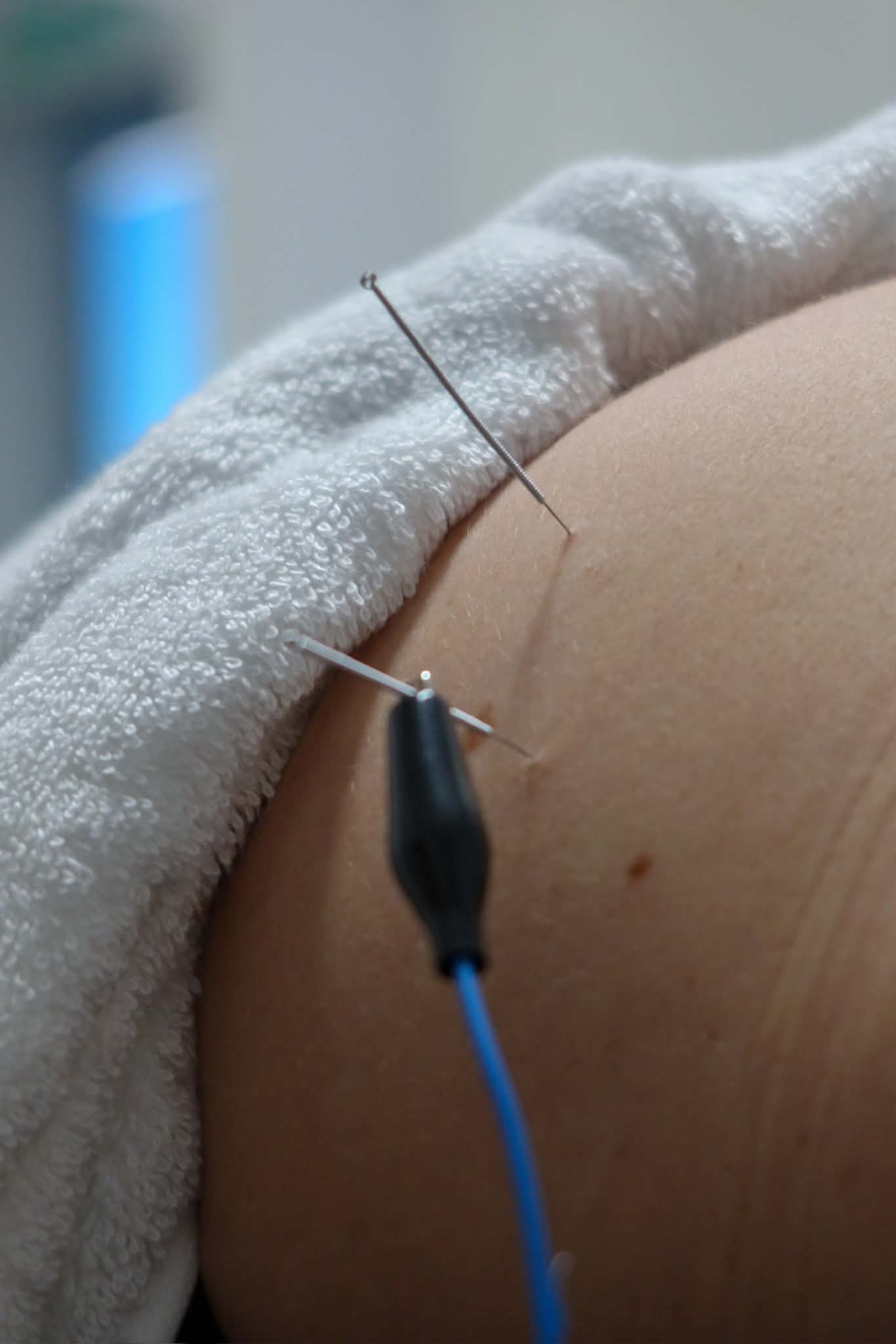
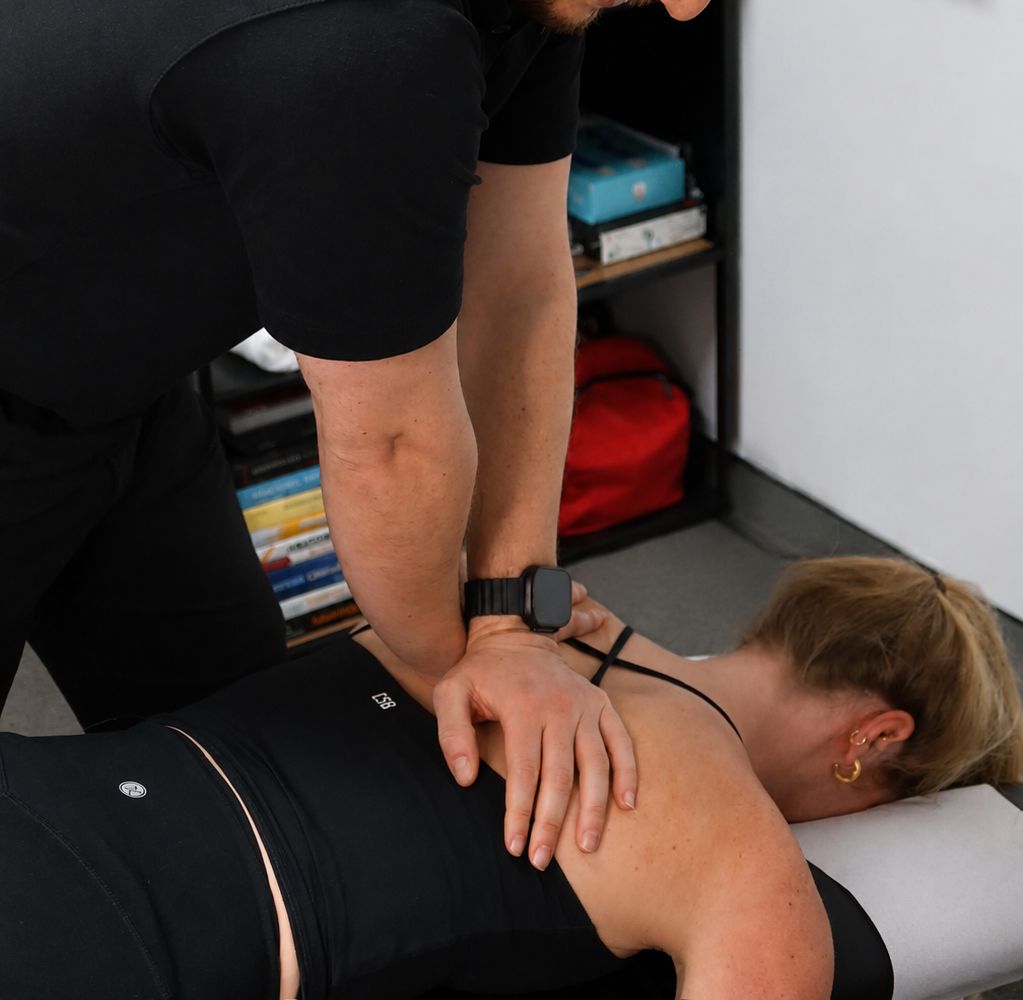
Manual treatment - adjustments, soft tissue therapy, dry needling - is effective for reducing pain and restoring movement. But for many conditions, the benefit is temporary if the underlying weakness or movement deficit is not addressed. The pain returns because the body goes back to the same patterns that created the problem in the first place.
Exercise rehabilitation breaks this cycle. By strengthening the muscles that support the affected joints, improving motor control, and correcting the movement patterns that contributed to the injury, rehabilitation gives the body the capacity to maintain the improvements achieved through manual treatment. This is why the combination of hands-on treatment and active rehab consistently outperforms either approach used alone.
What your program looks like
Every exercise program at BodySync is written specifically for you. It is based on the deficits identified in your assessment, your current fitness level, and the demands of your daily life or sport. Programs typically start simple - two or three exercises targeting the key areas - and progress as you get stronger. We teach every exercise in the clinic, check your form, and adjust the program as you improve.
You do not need a gym membership. Most programs can be done at home with minimal equipment. If you do train at a gym, the exercises are designed to complement your existing training rather than replace it.
Return to sport and activity
For patients recovering from sports injuries, rehabilitation follows a structured progression from pain-free movement through to sport-specific loading and return to full training. This is not guesswork - each stage has objective criteria that need to be met before progressing. The goal is to get you back to your sport safely and with confidence, knowing that the injury has been properly rehabilitated.
A program built for you
Your exercise program is designed around the assessment findings and your goals - whether that is returning to a sport, managing a chronic condition, or simply being able to move without pain. Exercises are demonstrated in clinic, explained clearly, and adjusted until you can perform them well.
Progressive loading
The program progresses as your capacity improves. This is important - exercises that are too easy stop producing adaptation, and exercises that are too hard increase injury risk. We review and adjust the program at each visit based on how you are responding and what has changed.
Integrated with hands-on care
Rehabilitation does not replace manual therapy - it works alongside it. Hands-on treatment addresses the immediate pain and restriction; rehabilitation addresses the underlying capacity deficit. Both are usually necessary for lasting results, particularly in recurring or chronic presentations.
Common questions
What people ask us
How much time will the exercises take?
That depends on the program and where you are in your rehabilitation. Initial programs are generally short - 10 to 20 minutes - focused on quality over quantity. As you progress, the time commitment may increase. We are realistic about what people will actually do consistently and build programs accordingly.
Do I need any equipment?
Most programs can be done at home with minimal equipment - a resistance band and your own bodyweight covers the majority of rehabilitation exercises. Where gym access is useful, we will let you know, but it is not a requirement.
I have been given exercises before and they did not help - why would this be different?
Generic exercise programs often miss the specific deficit that is driving the problem. Assessment-led rehabilitation targets exactly what needs to change for your presentation. It is also possible that previous exercises were the right idea but progressed too quickly or slowly, or that technique was not well established. We spend time making sure you are moving well, not just moving.
Can I continue my normal training alongside rehabilitation?
Usually yes, with some modification. We will give you clear guidance on what loading is appropriate alongside your rehabilitation program, and how to adjust your training during recovery. The goal is to keep you as active as safely possible, not to restrict you unnecessarily.
Is exercise rehabilitation covered by private health insurance?
When performed as part of a chiropractic consultation it is typically claimed under your chiropractic extras rebate. Cover varies between funds. We have HICAPS for on-the-spot claiming. See our guide to private health and chiropractic for more detail.
Do I need to go to a gym?
No. Most programs can be done at home with minimal or no equipment. If you do have access to a gym, the exercises are designed to fit alongside your existing training. We will always work with what is practical for your situation.
How long until I see results?
Most patients notice improvement within the first two to four weeks of consistent exercise. Strength gains take longer - typically six to twelve weeks for meaningful change. The timeline depends on the condition, your starting point, and how consistently you do the exercises. We set realistic expectations upfront.
Will you show me how to do the exercises?
Yes, always. Every exercise is demonstrated and practised in the clinic before you do it at home. We check your form and adjust the exercise if needed. If something is not working or feels wrong, we modify the program at your next visit.
Ready to get started?
Book an initial consultation. We will assess your movement, explain what we find, and build a rehabilitation plan around your goals.
Book online