What we treat
Where cupping is most useful
Cupping works best where fascial restriction, tissue adhesion, or poor local circulation is contributing to the problem. It is works well in areas with dense fascial tissue or where compression-based techniques have limited reach.
Upper back and neck pain
Stiffness and restricted movement through the mid-back, shoulders, and neck from posture, desk work, or training
Shoulder pain
Tightness through the upper traps, rotator cuff area, and surrounding tissue that limits overhead or lateral movement
Lower back pain
Tightness and stiffness through the lower back from sitting, lifting, or training load
Hip pain
Deep tightness through the glutes, piriformis, and hip flexors that limits mobility or refers pain into the leg
Knee pain
Tightness through the quads, ITB, and surrounding tissue that contributes to anterior or lateral knee pain
Calf and Achilles pain
Calf tightness, Achilles soreness, and related lower leg issues in runners and active people
In detail
How cupping helps with common conditions
Upper back and neck pain
The thoracic paraspinals and upper trapezius are among the most responsive areas to cupping. Sustained posture from desk work or driving creates fascial restriction through these regions that limits thoracic rotation and contributes to neck pain and stiffness. Cupping decompresses the tissue, reduces the restriction, and improves movement through the mid-back and shoulders. This is often combined with thoracic adjustments and soft tissue work for a comprehensive approach.
Lower back pain
The thoracolumbar fascia is a dense sheet of connective tissue that covers the lower back muscles. When it becomes restricted - from sitting, heavy lifting, or training - it limits lumbar mobility and contributes to stiffness and pain. Dynamic cupping across the lower back and into the gluteal region can release this fascial restriction and improve how the lower back moves. Combined with core strengthening, it addresses both the symptom and the underlying cause.
Hip pain and calf tightness
The hip flexors, IT band, and calf muscles develop fascial restriction with running, cycling, and gym training. Cupping over these areas provides a decompressive release that is difficult to achieve with compression-based techniques alone. For runners dealing with calf tightness, Achilles soreness, or IT band pain, cupping can be a useful addition to the treatment plan alongside dry needling and progressive loading.
Recovery between training sessions
Athletes and regular gym-goers sometimes use cupping as part of their recovery between sessions. The decompressive effect can reduce post-training tightness and soreness, particularly through the upper back, shoulders, and legs. While it is not a substitute for proper programming and load management, it can be a useful tool for managing tissue tightness during heavy training blocks. For a broader approach to sports-related care, cupping fits alongside the other treatment modalities we offer.
Shoulder and rotator cuff tightness
The posterior shoulder and supraspinatus region respond well to cupping, particularly when fascial restriction is limiting overhead movement or contributing to impingement symptoms. Cupping over the posterior deltoid and infraspinatus can release tissue that is difficult to access with direct pressure. Combined with shoulder mobilisation and rotator cuff strengthening through rehabilitation, it forms part of a comprehensive approach to shoulder pain and restricted range of motion.
Knee pain
Cupping around the knee - particularly over the quadriceps, IT band, and popliteal region - can reduce fascial tension that contributes to anterior knee pain and patellofemoral issues. For runners and gym-goers dealing with knee-related training pain, cupping is a useful addition to the treatment plan alongside hip and knee strengthening and training load modification.
The process
What to expect at your session
Assessment first
Cupping is not applied to every patient or every presentation. We assess movement and tissue quality first, identify where restriction is present, and confirm that cupping is an appropriate option. If you have certain skin conditions, are on blood thinners, or have active inflammation in the area, we will discuss alternatives.
Cup placement
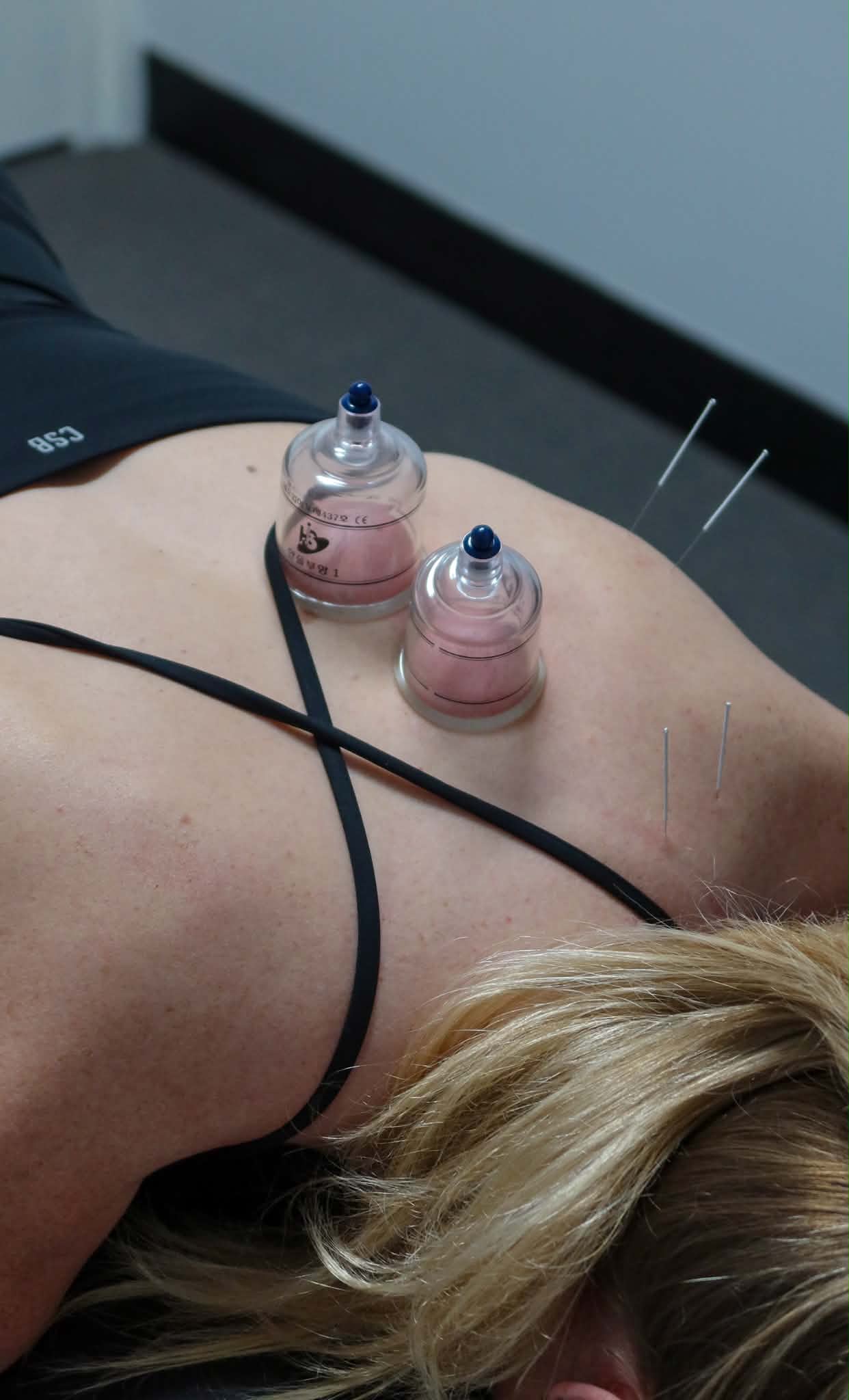
Cups are placed over the identified areas. You will feel a pulling or sucking sensation - not pain. Depending on the presentation, cups may be left in place (static cupping) or moved across the skin with some oil applied (dynamic cupping). Sessions typically last 5 to 15 minutes.
The marks
Circular marks (discolouration) are a normal and expected result of cupping. They are not bruises from tissue damage - they result from blood being drawn to the surface. They are typically not painful to touch, though the area can be mildly tender. They fade within three to seven days. Darker marks over specific areas simply indicate greater local restriction.
Combined treatment
Cupping is almost always followed by hands-on work - joint mobilisation, soft tissue therapy, or dry needling - and where relevant, exercise rehabilitation to address any underlying movement patterns contributing to the restriction. The aim is always to address why the tissue became restricted, not just to release it temporarily.
Common questions
Safety and what people ask
Does cupping hurt?
The suction sensation is unusual but not painful for most people. The marks it leaves can be mildly tender to touch for a day or two. If you have a low pain threshold or are unsure, let us know and we can adjust the level of suction accordingly.
How long do the marks last?
Typically three to seven days. They fade progressively and are not permanent. Darker marks tend to fade more slowly. The marks are not a measure of how intense the treatment was - they reflect the degree of local restriction in the tissue.
Can I train after a cupping session?
Light activity on the same day is generally fine. Intense training over the treated area in the first 24 hours is best avoided while any post-treatment tenderness settles. We will give you specific guidance based on your training schedule and what was treated.
Is cupping covered by private health insurance?
When cupping is performed as part of a chiropractic consultation it is typically claimed under your chiropractic rebate. Cover varies between funds and levels of cover. We have HICAPS at the clinic for on-the-spot claiming. See our guide to private health and chiropractic for more detail.
Is it the same as traditional Chinese cupping?
The cups are similar but the approach is different. Traditional Chinese cupping follows meridian pathways according to TCM principles. What we practise is a Western myofascial technique - cups are placed based on where restriction is found in assessment, using anatomical and biomechanical reasoning.
How long do the cupping marks last?
Usually three to seven days. The marks are painless and fade on their own. Areas with more restriction tend to mark more. The intensity reduces with subsequent sessions as the tissue improves.
Can cupping help with headaches?
Cupping across the upper trapezius and thoracic region can reduce the fascial tension that contributes to tension-type headaches. It is often combined with trigger point release through the neck and suboccipital muscles for headache presentations.

Ready to get started?
Book an initial consultation. We will assess your presentation, explain our findings, and put together a plan that makes sense for you.
Book online