How do adjustments help?
When a joint is not moving well, the muscles around it tighten up, the surrounding tissue becomes sensitised, and movement patterns change to compensate. Over time this leads to pain, stiffness, and often problems in other areas.
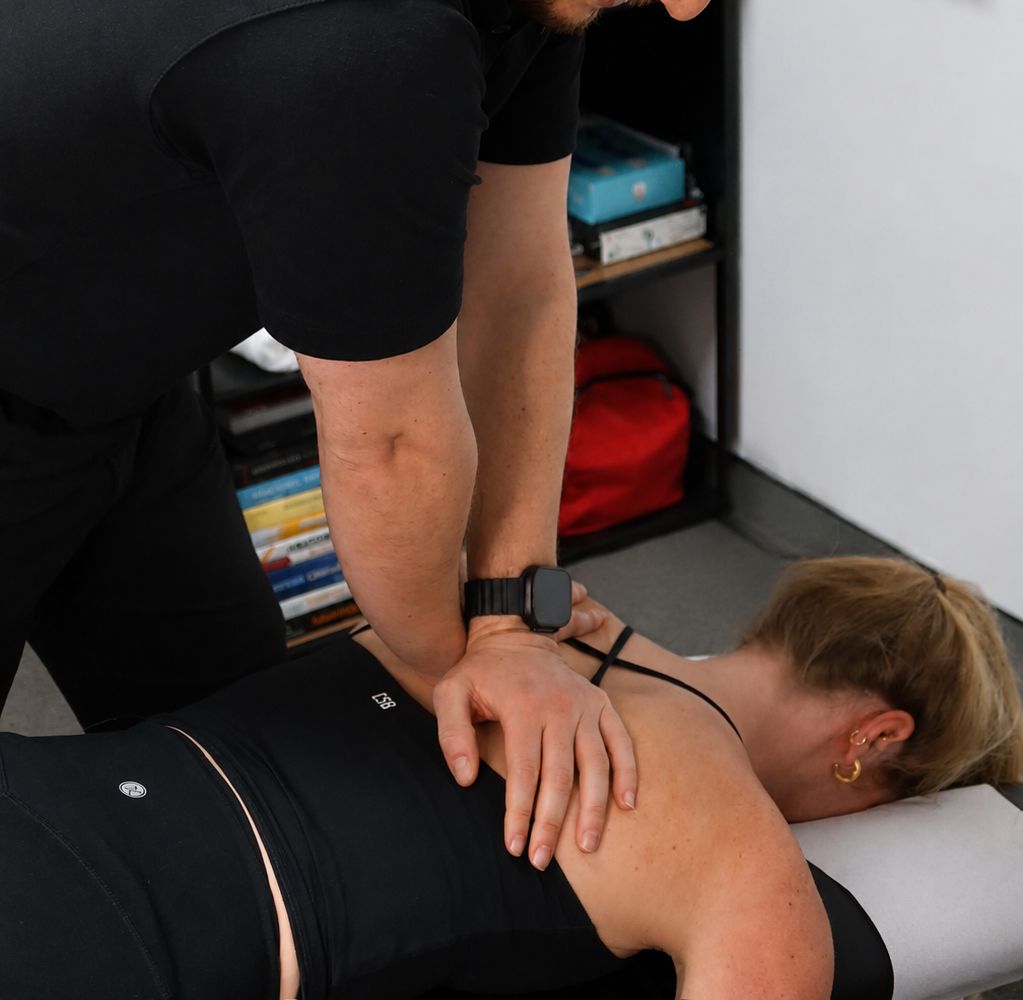
An adjustment restores movement to that joint. This has a mechanical effect - the joint moves more freely - and a neurological effect, as the input from the adjustment can reduce pain signalling and muscle guarding in the area. This is why people often feel broader relief after treatment, not just at the spot that was adjusted.
Adjustments are well supported for a range of musculoskeletal conditions, particularly lower back pain, neck pain, and headaches. The results tend to be strongest in the short term for pain and disability. For longer-term benefit, combining adjustments with active care like exercise rehabilitation produces the best outcomes.
What happens
- Joint movement restoredThe adjustment takes a restricted joint through its normal range, reducing stiffness and improving how it moves
- Pain reductionInput from the adjustment can reduce pain signalling at the spinal cord level, providing relief beyond the treated joint
- Muscle relaxationTight muscles guarding a restricted joint often relax once the joint is moving properly again
- Improved functionBetter joint movement means less compensation and less strain on surrounding structures
What we treat
Where adjustments help most
Adjustments and mobilisation are most useful where joint stiffness or restricted movement is contributing to pain. They form the core of most treatment plans at the clinic.
Lower back pain
Lumbar and sacroiliac joint restriction contributing to stiffness, pain, or referred leg symptoms
Neck pain
Cervical joint stiffness causing pain, reduced rotation, or headaches - read more in our neck adjustment safety article
Headaches
Cervicogenic and tension-type headaches driven by upper cervical and thoracic joint restriction
Mid-back stiffness
Thoracic restriction from posture, desk work, or training that limits rotation and shoulder movement
Shoulder and arm pain
Shoulder, elbow, and wrist joint restriction contributing to pain or limited function
Hip, knee, and ankle pain
Lower limb joint stiffness from injury, training, or compensation patterns
In detail
How adjustments help with common conditions
Lower back pain
Lower back pain is the most common reason people visit the clinic. In many cases the lumbar facet joints or sacroiliac joints have become restricted, and the muscles around them have tightened in response. An adjustment to the affected segment restores movement and reduces muscle guarding, often providing noticeable relief within the first session.
For acute lower back pain - the kind that comes on suddenly after lifting, bending, or sometimes for no obvious reason - adjustments combined with soft tissue therapy help settle things down quickly. For chronic or recurring lower back pain, the adjustment is part of a broader plan that includes exercise rehabilitation to address the underlying strength and movement deficits keeping the problem coming back.
Neck pain and stiffness
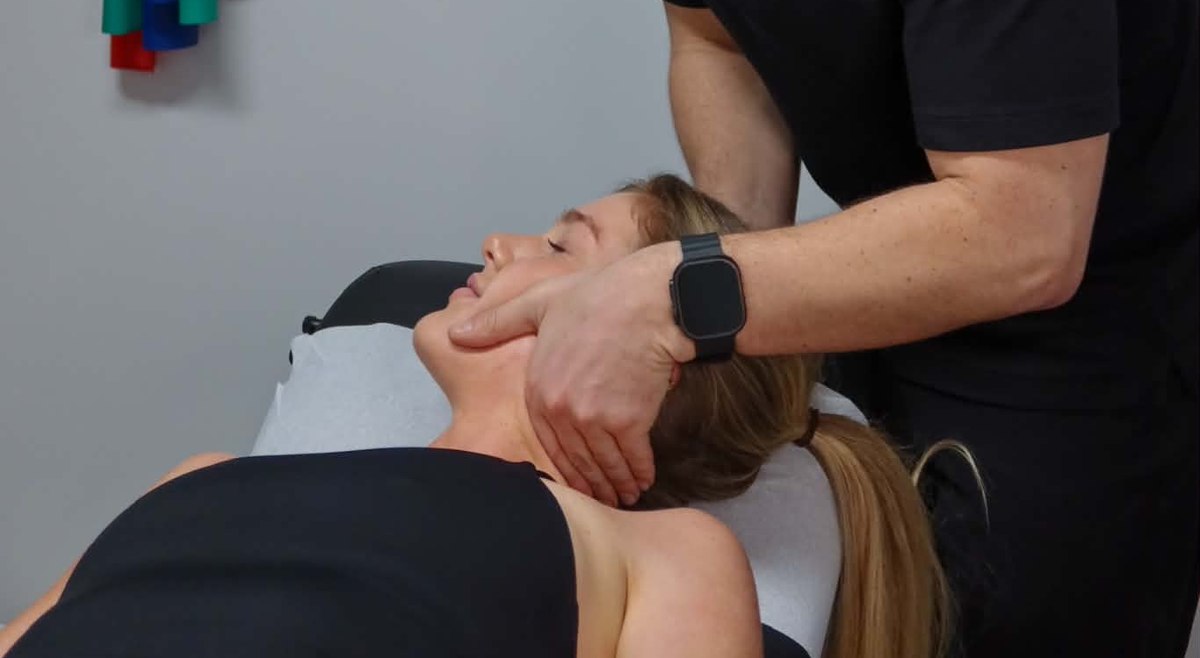
Neck pain is often driven by restriction in the cervical and upper thoracic spine. Desk work, phone use, driving, and poor sleeping positions all contribute to joints in the neck becoming stiff over time. Cervical adjustments or mobilisation restore movement to those segments, reducing pain, improving rotation, and often relieving associated headaches.
We frequently adjust the thoracic spine as well when treating neck pain, because stiffness in the mid-back forces the neck to compensate. Opening up movement through the thoracic region takes load off the cervical spine and leads to longer-lasting improvement. For more on the safety of cervical adjustments, see our neck manipulation safety article.
Headaches
Cervicogenic headaches originate from the upper cervical joints and refer pain into the head, often behind the eyes or across the forehead. Tension-type headaches frequently involve restriction through the cervical and thoracic spine combined with tight muscles in the neck and suboccipital region. In both cases, adjustments to the relevant spinal segments reduce joint restriction and improve the movement patterns contributing to the headache.
For patients who experience headaches regularly, the treatment plan typically includes adjustments alongside soft tissue work through the neck and suboccipital muscles, and exercises targeting the deep neck flexors and thoracic extensors to provide lasting improvement.
Thoracic and rib stiffness
The thoracic spine is designed to rotate and extend, but sustained postures - desk work, driving, looking at a phone - gradually restrict that movement. When the thoracic spine stiffens, the shoulders, neck, and lower back all compensate, which is why thoracic restriction shows up as a contributing factor in a wide range of presentations.
Thoracic adjustments are satisfying for most patients because the relief is immediate and often quite significant. Ribs that feel stuck or painful with breathing also respond well to mobilisation of the costovertebral joints where the rib meets the spine.
Shoulder, hip, and extremity pain
Joint restriction is not limited to the spine. A stiff shoulder can limit overhead movement and contribute to impingement. A restricted hip can alter gait and loading patterns through the knee and lower back. Ankle stiffness after a sprain can persist long after the ligaments have healed, affecting balance and running mechanics.
In all these cases, restoring joint movement through adjustment or mobilisation is the starting point. From there, rehabilitation exercises rebuild strength and control around the joint to prevent the problem returning. For sports-related injuries, this combined approach is particularly important for getting back to full training safely.
Sciatica and referred leg pain
Sciatica-like symptoms - pain, tingling, or numbness radiating down the leg - are often associated with lower back joint restriction, disc irritation, or piriformis tightness. Lumbar and pelvic adjustments can help by restoring joint movement and reducing nerve irritation. Mobilisation of the sacroiliac joint and hip is also commonly involved. Treatment is combined with neural mobilisation and targeted rehabilitation to address the factors driving the symptoms. Not all leg pain is sciatica - a thorough assessment determines the source before treatment begins.
Jaw pain and TMJ dysfunction
The temporomandibular joint responds well to mobilisation and manual therapy. Jaw stiffness, clicking, clenching, and referred pain into the temple or ear can all be addressed through a combination of TMJ mobilisation, cervical adjustments, and soft tissue release through the jaw muscles, upper trapezius, and suboccipital region. This is a common presentation that many people do not realise a chiropractor can help with.
Pregnancy-related back and pelvic pain
Lower back pain and pelvic girdle pain are common during pregnancy as the body adapts to changes in load, posture, and ligament laxity. Gentle mobilisation and soft tissue techniques can provide relief without the use of medication. The approach is adapted for each stage of pregnancy, using comfortable positioning and low-force techniques. Many patients find that regular care through the second and third trimesters significantly reduces pain and improves daily function.
Postural pain from desk work
Prolonged sitting creates predictable patterns of restriction: the thoracic spine stiffens, the hip flexors tighten, the glutes weaken, and the cervical spine compensates. Adjustments to the thoracic and cervical spine restore movement, while soft tissue therapy addresses the muscle tightness. But the real value for desk workers comes from combining manual treatment with a targeted exercise program that strengthens the postural muscles and counteracts the effects of sustained sitting. Without the exercise component, the improvements from manual treatment tend to be short-lived.
The process
What to expect at your session
Assessment first
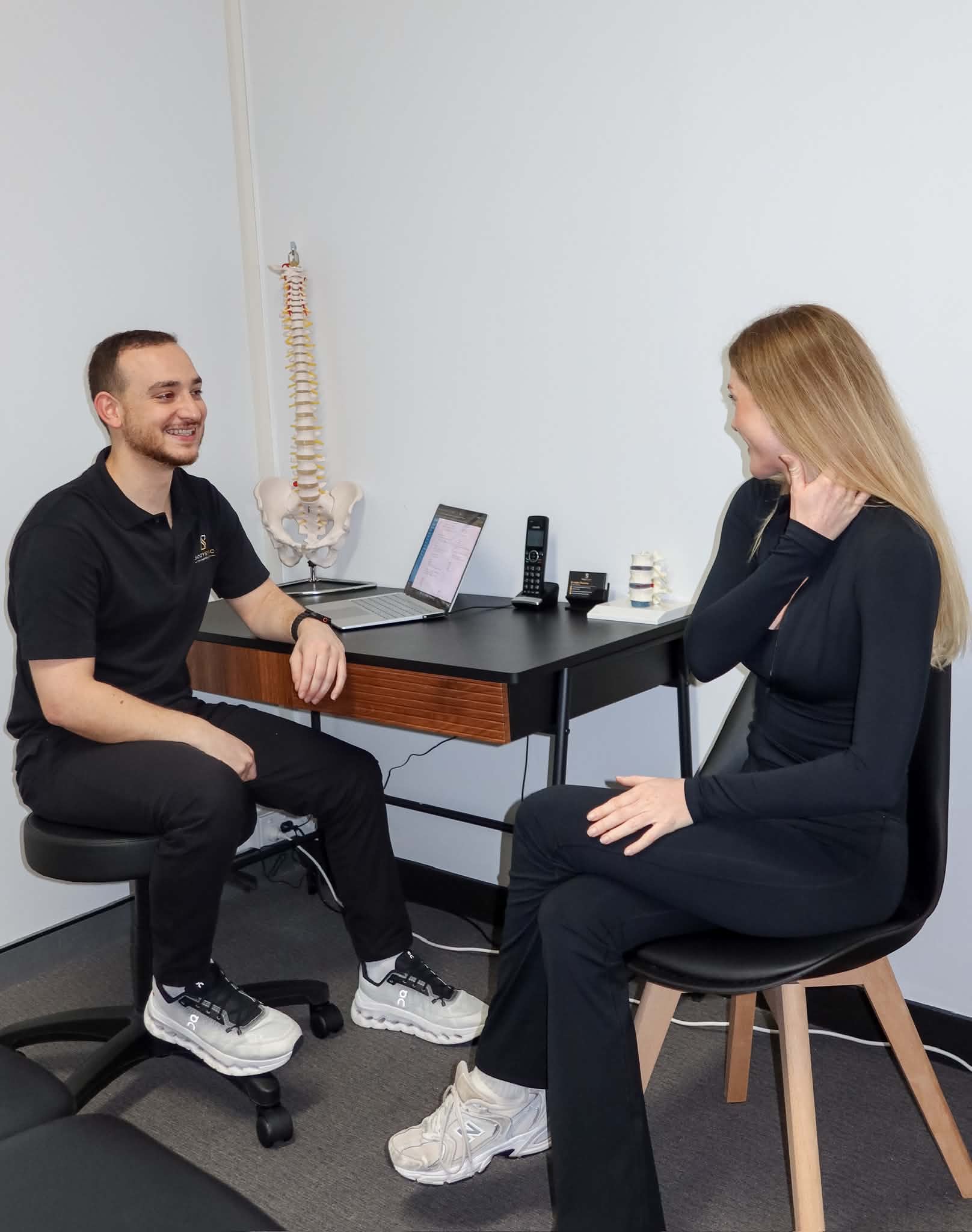
Before any treatment, we take a thorough history and examine the relevant joints and surrounding tissue. This tells us which joints need attention and which technique is appropriate. Read more in our first appointment guide.
Technique selection
We choose between adjustment and mobilisation based on the joint, your presentation, and your preference. If you would rather not be adjusted, mobilisation and other manual techniques can achieve the same goal. We always explain what we are doing and why.
Treatment
Adjustments are quick and controlled. Mobilisation involves slower, sustained movements. Both are comfortable for most people. Mild soreness for a day or two afterward is normal, similar to what you might feel after exercise.
Combined with other techniques
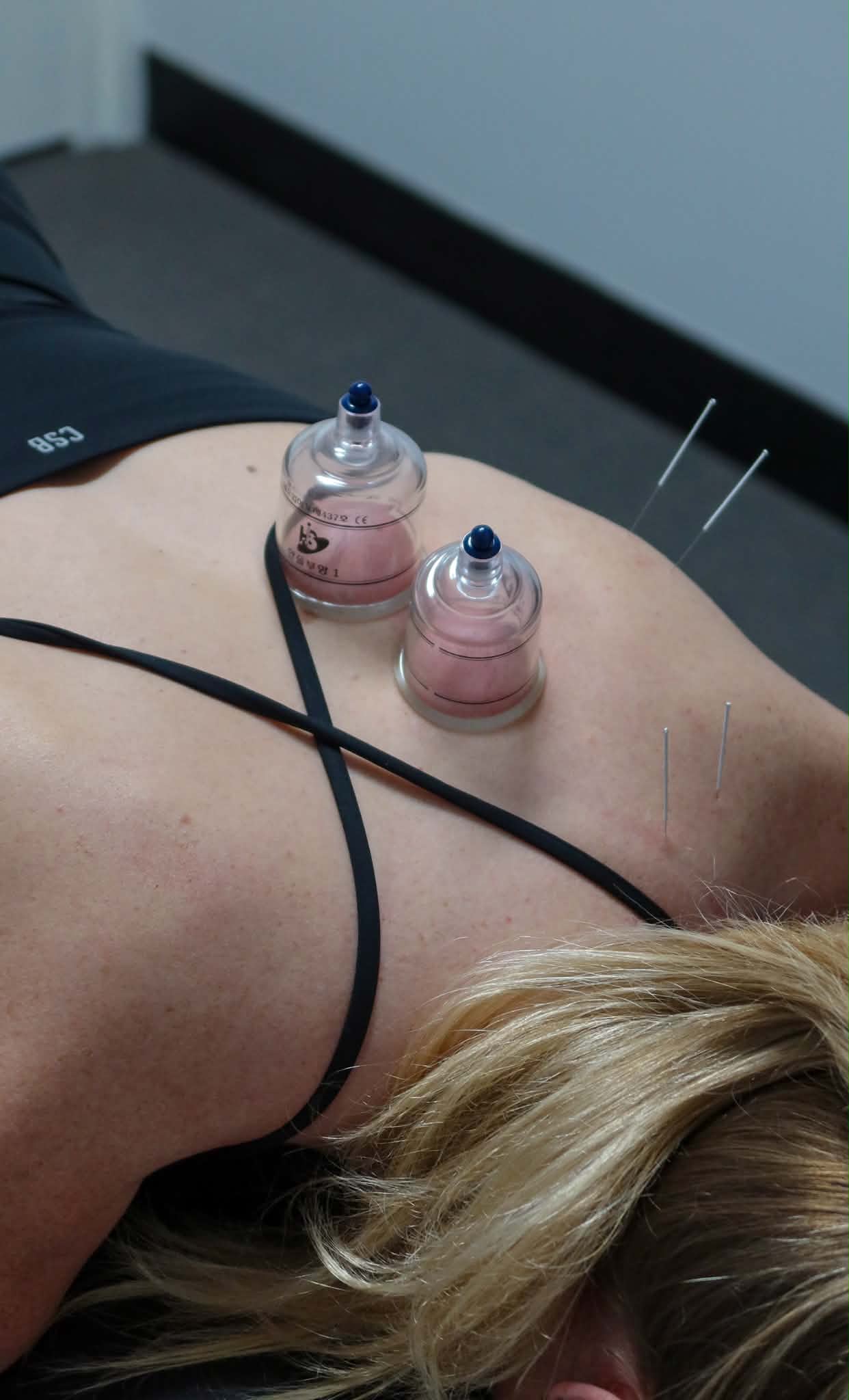
Adjustments rarely happen in isolation. A typical session also includes soft tissue therapy, and where appropriate dry needling, cupping, or exercise rehabilitation.
Common questions
What people ask us
Is the cracking sound normal?
Yes. The sound is gas releasing from the joint fluid under pressure. It is harmless and does not mean anything is breaking or being forced. Some adjustments do not produce a sound at all.
Are chiropractic adjustments safe?
Yes. Chiropractic adjustments have a strong safety profile. The most common side effects are mild and short-lived - temporary soreness or stiffness that settles within a day or two. Serious adverse events are rare. We screen every patient before treatment. See our article on neck adjustment safety for more detail.
What is the difference between an adjustment and mobilisation?
An adjustment uses a quick, controlled thrust. Mobilisation uses slower, graded pressure. Both restore joint movement and reduce pain. We choose based on what is appropriate for you.
Do I need to keep coming back?
That depends on your presentation. Some issues resolve in a few visits. Others benefit from periodic check-ins. We always give you a clear treatment plan and timeframe upfront.
Is it covered by private health insurance?
Chiropractic adjustments are typically covered under extras policies. We have HICAPS for on-the-spot claiming. See our guide to private health and chiropractic for more detail.
How many sessions will I need?
This varies depending on the condition, how long you have had it, and how your body responds. We have written a full guide on how many chiropractic sessions you might need. Acute issues often improve within two to four visits. Chronic or recurring problems may take longer and usually benefit from rehabilitation alongside manual treatment. We give you a clear treatment plan and expected timeframe after your initial assessment.
Can I be adjusted if I have a disc injury?
In many cases, yes. Disc injuries are common and most respond well to conservative care including modified adjustments or mobilisation. The technique and approach are adapted based on the nature and severity of the disc issue. We assess thoroughly before treating and will always refer for imaging or specialist opinion if needed.
What is the difference between chiropractic and physiotherapy?
Both professions treat musculoskeletal conditions. For a full comparison, see our article on chiropractic vs physiotherapy. Chiropractors tend to use more manual joint adjustment as a core technique, while physiotherapists often place greater emphasis on exercise-based rehabilitation. In practice, there is significant overlap. At BodySync we use adjustments, soft tissue therapy, dry needling, and exercise rehabilitation - so the approach is comprehensive regardless of the title.
Can children be adjusted?
Yes. Paediatric adjustments use very gentle, low-force techniques appropriate for the child's age and size. Common reasons parents bring children in include growing pains, postural concerns, and sports-related issues. The assessment and treatment are always adapted to the individual.
Ready to get started?
Book an initial consultation. We will assess your presentation, explain our findings, and put together a plan that makes sense for you.
Book online