Patient Guide
What Is Dry Needling?
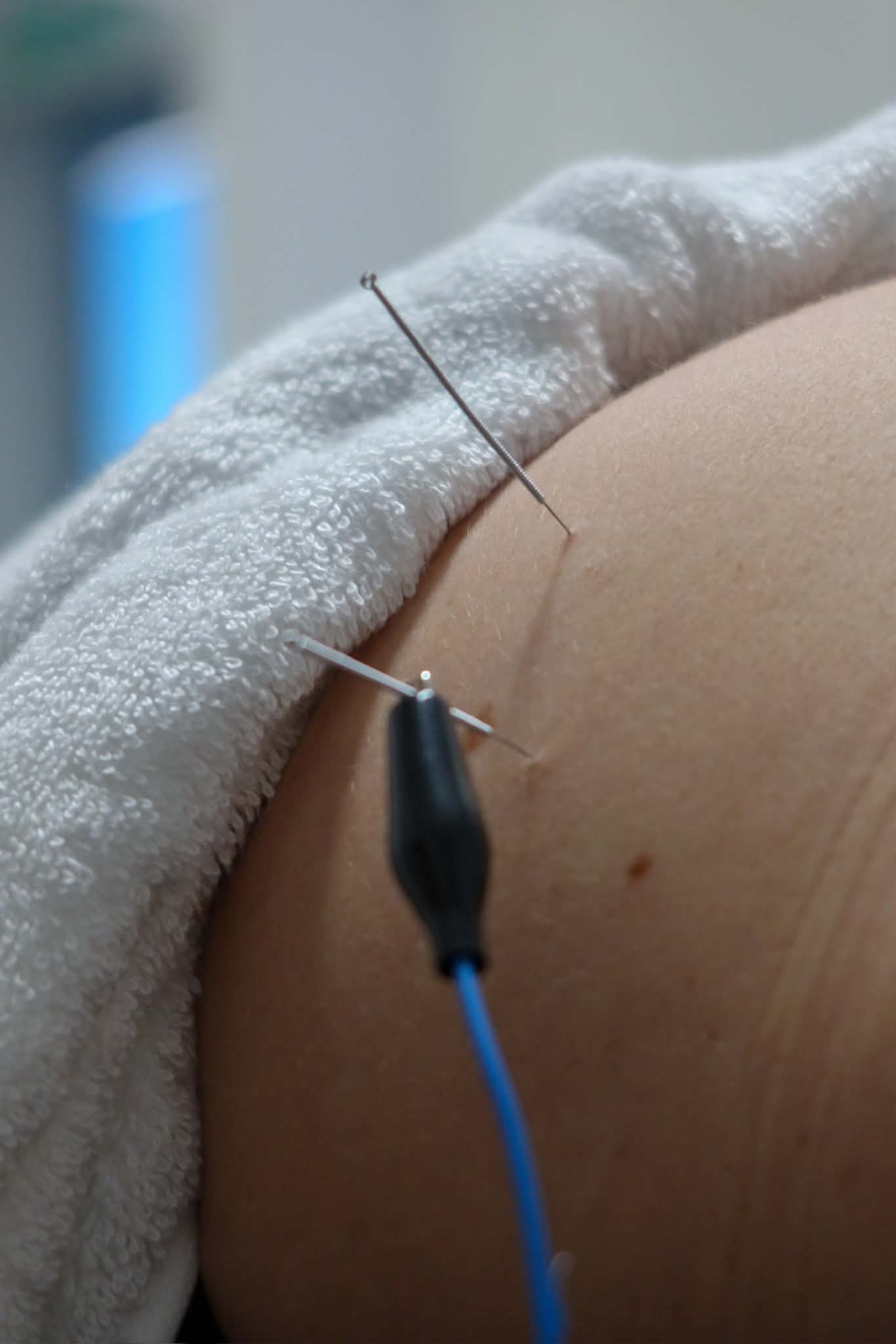
Dry needling is one of those treatments that sounds worse than it is. It is a safe, effective technique used to treat muscle pain, tightness, and movement restriction by targeting what are known as myofascial trigger points. It is not the same as acupuncture, and it does not involve any medication.
How Does Dry Needling Work?
During dry needling, a thin, solid filiform needle is inserted through the skin into a myofascial trigger point. These are tight, irritable spots within a muscle that can cause local pain, referred pain, and restricted movement. The needle produces what is called a local twitch response, a brief involuntary contraction that helps release the taut band and reduce tension. Beyond just releasing a knot, dry needling also appears to influence how the nervous system processes pain, which helps explain why the effects often extend beyond the muscle that was needled.
What Conditions Does It Help With?
Dry needling has been studied across a range of musculoskeletal conditions including neck pain, low back pain, shoulder pain, tennis elbow, rotator cuff tendinopathy, patellar tendinopathy, and plantar fasciitis. It is most commonly used for myofascial pain, but when combined with exercise it has also been shown to improve outcomes in tendon-related conditions compared to exercise alone.
Is Dry Needling Safe?
Mild side effects like bruising, minor bleeding, and temporary soreness are common and expected. Serious adverse events are rare.
Some people may experience a vasovagal response during or shortly after treatment. This is where the body reacts to the sensation of the needle by temporarily lowering blood pressure and heart rate, which can cause lightheadedness, sweating, or in some cases a brief faint. It is not dangerous and passes quickly. If you have experienced this with vaccinations or blood tests, dry needling may not be well suited to you.
What Does It Feel Like?
Most people barely feel the needle go through the skin. Once it reaches the trigger point, you may feel a deep cramping or aching sensation. That is the local twitch response, and while it can be uncomfortable for a moment, it is usually brief. Mild soreness for a day or two afterwards is normal.
How We Use It at BodySync
Dry needling is one of several tools we use at BodySync Chiropractic. It works well on its own for muscular pain, but we often combine it with chiropractic adjustments, joint mobilisation, soft tissue therapy, cupping, TENS therapy, or exercise rehabilitation depending on what suits your presentation. You can read more about some of these in our articles What Is a Chiropractic Adjustment? and What Is Cupping Therapy?
If you have questions or want to know whether it might help with what you are dealing with, book online or give us a call on (08) 9274 5615.
References
- Rabanal-Rodríguez G, et al. Neurophysiological effects of dry needling: a systematic review and meta-analysis. Archives of Physical Medicine and Rehabilitation. 2026;107(2):299-314.
- AlAidarous HA, et al. Dry needling for mechanical neck pain: a systematic review and meta-analysis of randomized controlled trials. Surgical Neurology International. 2025;16:44.
- Tayyab M, et al. Effectiveness of dry needling combined with exercise versus exercise alone in various tendinopathies. Cureus. 2025;17(9):e92833.
- Fernández-de-las-Peñas C, et al. Frequency and severity of adverse events associated with dry needling: a systematic review and meta-analysis. Physical Therapy. 2026;106(6):pzag050.
Ready to talk through your options and find what works for you?
Book Online